Black Women’s Economic Power: Visualizing Domestic Spaces in the 1830s
  • Home
  • Interactive Map of the Community
  • Boarding Houses: Sites of Black Intellectual Production
    • Serena and Peter Gardiner
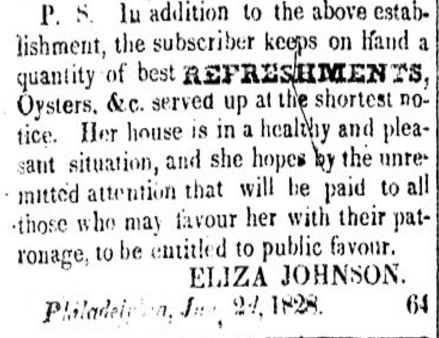
    • David and Eliza Johnson
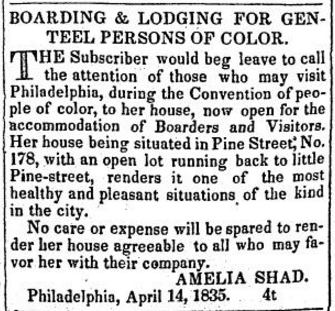
    • Amelia Shad
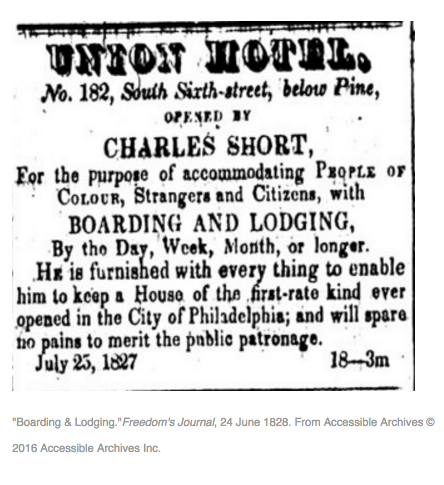
    • Rebecca and Charles Short
  • Dressmakers and Milliners: Contribution to the Community’s Mobility
    • Grace Bustill Douglass
    • Margaret Court
  • Bakeries: Feeding Delegates, Fostering Charity
    • Sarah Curtis
    • Elizabeth and Jacob Gilmore
  • Traveling Delegates
  • Interactive Visualizations: Places and Women Participants
  • Daughters and Gentlewomen: The Later Generation
  • Credits
  • Teaching
    • K-12
    • Teaching Questions: College/AP Classes
  • RETURN TO:
  • All Exhibits
  • Main Site
Select Page

BLACK WOMEN’S ECONOMIC POWER: VISUALIZING DOMESTIC SPACES IN THE 1830s

Boarding Houses: Sites of Black Intellectual Production

Explore brief biographies of the people who ran boarding houses, and of the women who gained economic independence through their sartorial and culinary skills.
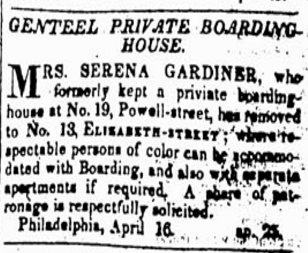
Serena and Peter Gardiner

Listing in a newspaper, from 1835.

Eliza and David Johnson

print newspaper ad

Amelia Shad

Rebecca and Charles Short

newspaperclipping


Viewing » BLACK WOMEN’S ECONOMIC POWER: VISUALIZING DOMESTIC SPACES IN THE 1830s

An exhibit in the collection of the Colored Conventions Project: Bringing 19th-century Black Organizing to Digital Life
RETURN to: All Exhibits • Main Site • Login

PAGE CITATION [citationic]


Creative Commons LicenseAll historical documents and images are in the public domain and are licensed under Creative Commons. Additional material created by the Colored Conventions Project is considered under copyright, but licensed under Creative Commons. This work is licensed under a Creative Commons Attribution-NonCommercial-ShareAlike 4.0 International License.