
Black Women’s Economic Power: Visualizing Domestic Spaces in the 1830s
  • Home
  • Interactive Map of the Community
  • Boarding Houses: Sites of Black Intellectual Production
    • Serena and Peter Gardiner
    • David and Eliza Johnson
    • Amelia Shad
    • Rebecca and Charles Short
  • Dressmakers and Milliners: Contribution to the Community’s Mobility
    • Grace Bustill Douglass
    • Margaret Court
  • Bakeries: Feeding Delegates, Fostering Charity
    • Sarah Curtis
    • Elizabeth and Jacob Gilmore
  • Traveling Delegates
  • Interactive Visualizations: Places and Women Participants
  • Daughters and Gentlewomen: The Later Generation
  • Credits
  • Teaching
    • K-12
    • Teaching Questions: College/AP Classes
  • RETURN TO:
  • All Exhibits
  • Main Site
Select Page

BLACK WOMEN’S ECONOMIC POWER: VISUALIZING DOMESTIC SPACES IN THE 1830s

TRAVELING DELEGATES

Delegates at the 1830s conventions came from multiple cities. Traveling carried its own risks; abduction of free African American men, women, and especially children was a regular threat. This meant that both the traveler and the family they left behind were vulnerable. Nevertheless, the delegates still attended the conventions. Furthermore, attendees to the First National Colored Convention would go on to attend more conventions in the future. This is evidence of their commitment to the goals Colored Conventions movement.

CIRCUITS OF DELEGATES: ORIGINS AND CONVENTION DESTINATIONS


The map below shows the routes traveled by attendees of the Philadelphia conventions. The purpose of this map is to give a sense of the critical importance of the widespread Black travel and mobility associated with the Colored Conventions movement.
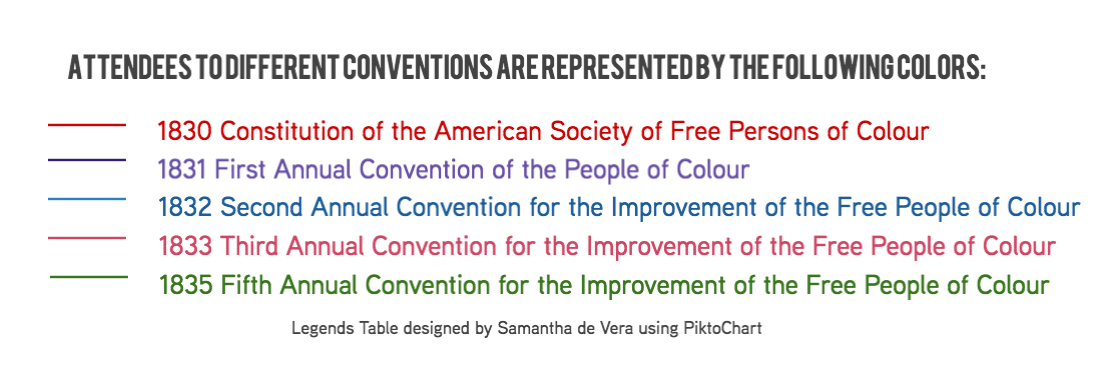
 

Key to travelling delegates map


Viewing » BLACK WOMEN’S ECONOMIC POWER: VISUALIZING DOMESTIC SPACES IN THE 1830s

An exhibit in the collection of the Colored Conventions Project: Bringing 19th-century Black Organizing to Digital Life
RETURN to: All Exhibits • Main Site • Login

PAGE CITATION [citationic]


Creative Commons LicenseAll historical documents and images are in the public domain and are licensed under Creative Commons. Additional material created by the Colored Conventions Project is considered under copyright, but licensed under Creative Commons. This work is licensed under a Creative Commons Attribution-NonCommercial-ShareAlike 4.0 International License.