
MUSIC IN THE COLORED CONVENTIONS
WHY DID THEY SING?
While Afro-Protestantism nurtured Black music and churches provided a physical space for Black people to gather, the music sung during the Conventions was not solely religious in nature as previous chapters have shown. Lawrence Levine calls for a reconsideration of Black music in the antebellum period so we may appreciate its diversity. Nineteenth-century Black music was not entirely religious. Music was a means to express and claim their dreams, individuality, and identity.[2] Convention proceedings reflect the varied roles music played in the lives of free and enslaved people. This section explores these roles.
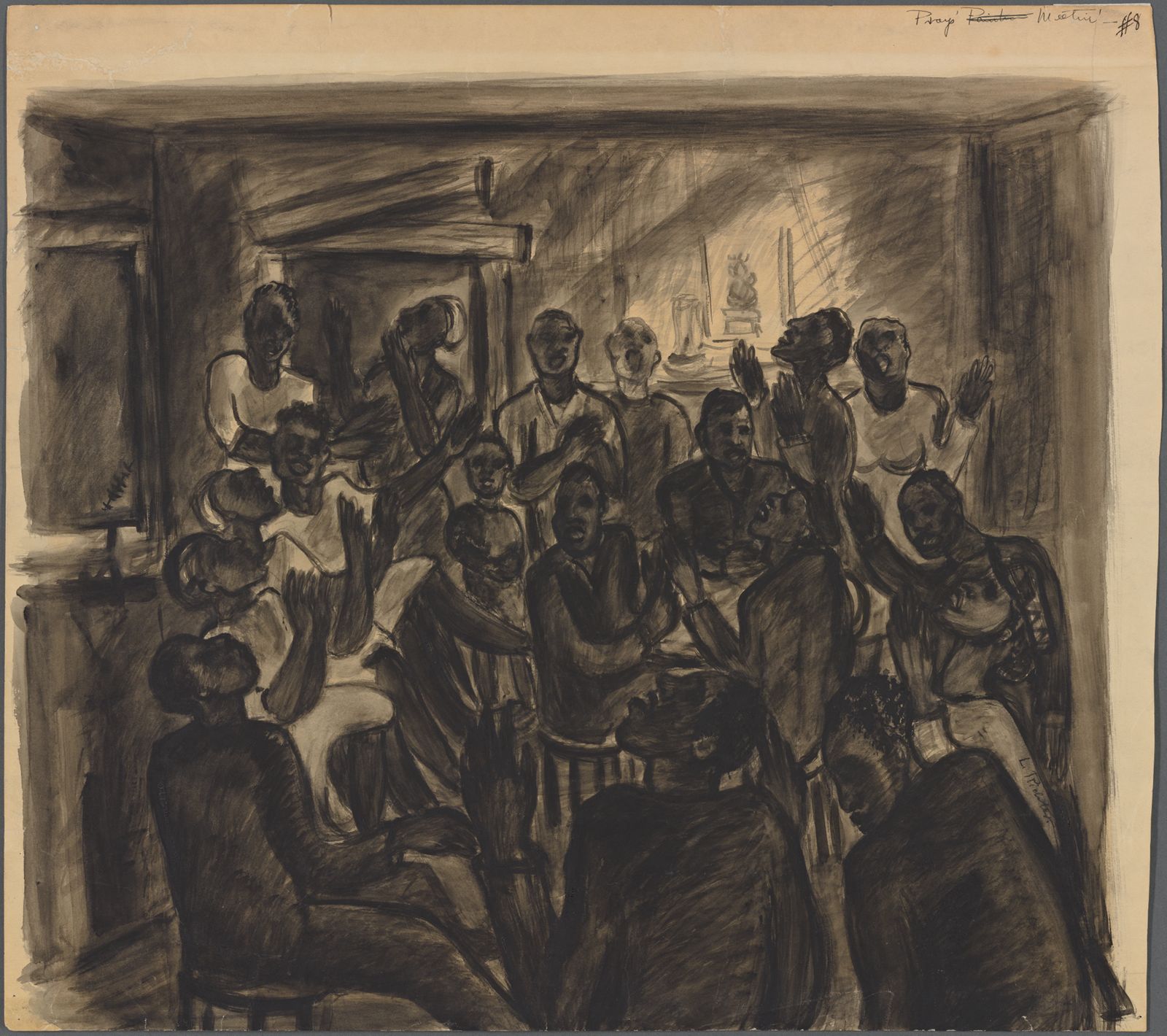
Schomburg Center for Research in Black Culture, Art and Artifacts Division, The New York Public Library. “Prays’ Meetin'” The New York Public Library Digital Collections. 1935 – 1943.
References
[1] Baraka, Imamu Amiri. ” The Phenomenon of Soul in African American Music.” The Music: Reflections on Jazz and Blues. New York, NY: Morrow, 1987, pp. 332. Retrieved from: Black Thought and Culture. (p. 270)
[2] “African American Music as Resistance,” Lawrence W. Levine. from. Burnim, Mellonee V, and Portia K. Maultsby. African American Music: An Introduction. 2015. (p. 587-588).