
MUSIC IN THE COLORED CONVENTIONS
FISK JUBILEE SINGERS
Ella Sheppard and The Fisk Jubilee Singers
The Fisk Jubilee Singers was founded in 1871 by Fisk Free Colored School treasurer George Leonard White and his assistant, Ella Sheppard, in an effort to rescue the school from financial difficulty. Sheppard was a self-liberated woman who escaped to Cincinnati, Ohio. She managed to get a German woman to teach her how to play piano and also convinced a well-known vocal teacher to give her lessons. She enrolled in the Fisk Free Colored School in 1868 after saving six dollars from teaching at a school for those who were once enslaved. White appointed Sheppard to be the Jubilee Singers’ accompanist and assistant choral director. Under Sheppard’s and White’s leadership, between 1878 and 1882, the singers toured nationally and internationally, raising what would amount to millions in today’s dollars. The funds they raised allowed Fisk to become a university.
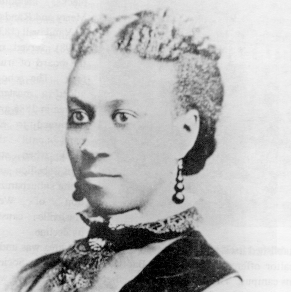
Ella Sheppard, singer, pianist, arranger of Negro Spirituals, and matriarch of the original Fisk Jubilee Singers, October 1871. Source: Fisk University Library, Special Collections.
The Fisk Jubilee Singers at the 1879 Colored Convention in Nashville
One of the Jubilee Singers’ many stops was at the 1879 National Conference of Colored Men held in Nashville, Tennessee. The work of the Jubilee Singers — raising money for a Black educational institution — mirrored the values of the Colored Conventions movement. The Colored Conventions were instrumental in the development of historically Black colleges and universities (HBCU), as some convention delegates were contributors, sponsors, and founders of HBCUs. At the 1879 convention, the Singers’ performance was a great success: “The song, ‘Steal Away to Jesus,’ was rendered in splendid style, and was followed by a burst of applause. The ‘Lord’s Prayer’ was then chanted in equally as good style, and was followed by similar applause. The following are the names of the singers who were present: Miss Maggie Porter, Miss G. M. Gordon, Messrs. H. D. Alexander, B. W. Thomas, Calvin Anderson, F. J. Loudin.”[1] In an unusual move, the recorder of the minutes named each singer. Below are photographs of some of the members who sang at the Nashville convention.
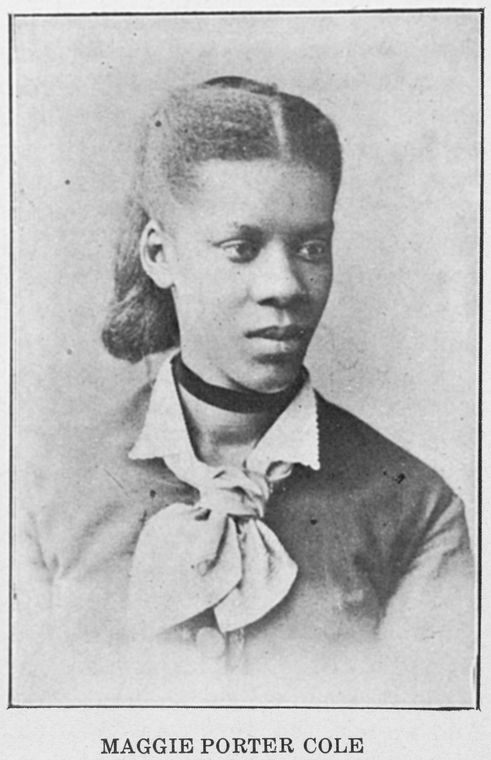
“Maggie Porter Cole.” New York Public Library Digital Collections, Schomburg Center for Research in Black Culture, Jean Blackwell Hutson Research and Reference Division, The New York Public Library. Accessed May 11, 2023. https://digitalcollections.nypl.org/items/510d47df-b718-a3d9-e040-e00a18064a99.
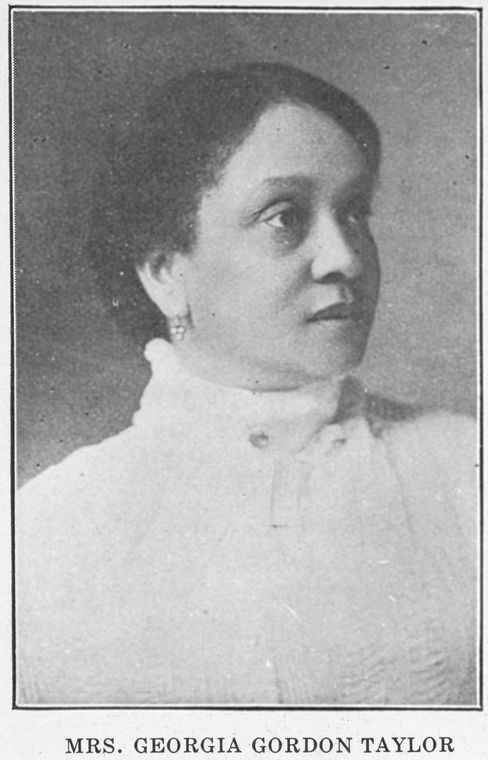
“Mrs. Georgia Gordon Taylor.” New York Public Library Digital Collections, Schomburg Center for Research in Black Culture, Jean Blackwell Hutson Research and Reference Division, The New York Public Library. Accessed May 11, 2023. https://digitalcollections.nypl.org/items/510d47df-b716-a3d9-e040-e00a18064a99.
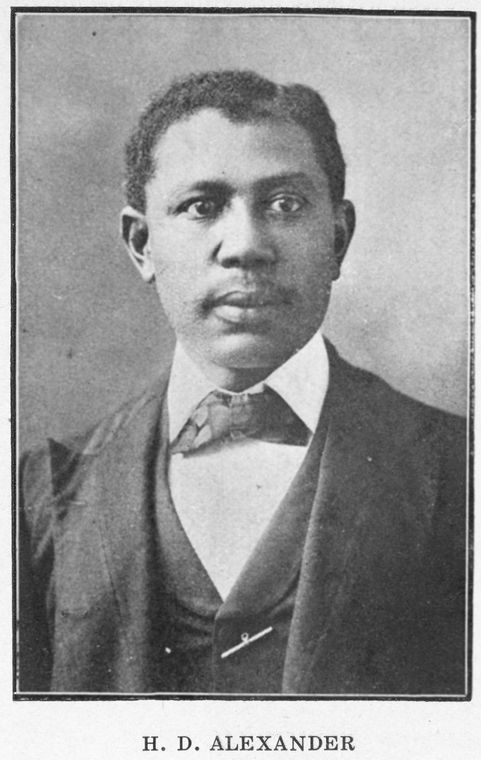
“Hinton D. Alexander.” New York Public Library Digital Collections, Schomburg Center for Research in Black Culture, Jean Blackwell Hutson Research and Reference Division, The New York Public Library. Accessed May 11, 2023. https://digitalcollections.nypl.org/items/510d47df-b71b-a3d9-e040-e00a18064a99.
The Jubilee Singers performed the song “Steal Away to Jesus,” a song composed by Wallace and Minerva Willis, who were once enslaved in the Choctaw nation. The song was very popular among enslaved people. John Alleger writes that “Steal Away” emphasizes “trouble” of enslavement and contains a double metaphor. On the one hand, “Steal Away” represents escape from slavery, and on the other, it represents the Christian promise of new life after death. Seven of the nine Jubilee Singers were formerly enslaved, so we can imagine that their rendition of this song was very moving for both them and the convention participants.[2]
The Delegates react to the Jubilee Singers’ experience of Racial Violence
Below is one of the most descriptive notes of musical performance found in the Conventions. This description illustrates the value that was placed on both musical talent and the singing of hymns in the Black community. It is no wonder then, that the delegates made the following resolution:
Whereas we, the delegates of the colored citizens of the United States, in Conference assembled, having: heard with so much delight the sweet songs of the celebrated Jubilee Singers; Resolved, That we do hereby express our delight and thanks, and most respectfully request them to give us an entertainment at such a time as shall be hereafter arranged.[3]
The Singers’ journey to the convention embodied the urgency of fighting for human and civil rights. Women members of the Singers had been ejected from the ladies car. The delegates condemn this racist mistreatment with the following statement:
Whereas we have listened with sorrow and regret to the remarks of the gentleman from Tennessee, Mr. Burrus, recounting the cruel and uncivil manner in which the Jubilee Singers have been recently treated by the employees of one of the railroad companies of this State; therefore Resolved, That we the representatives of the colored people of the nation, in National Conference assembled, do hereby utterly denounce and condemn such acts as being indecent and inhuman in the extreme, and that the persons committing the same deserve the censure and condemnation of all good citizens, irrespective of sex , color or nationality.[4]
The Fisk Jubilee Singers traveled at a time when national support for Black economic and political justice was dwindling. The Singers’ ability to travel and attain fame for their talents represented a larger cause of racial uplift, intertwining their goals with that of the Colored Conventions movement.[5] The delegates’ decision to take legal action on behalf of the Jubilee Singers is an example of solidarity against what Eddie Glaude and others call collective terror. Glaude underscores that the ongoing humiliation and violence that Black people faced created unceasing fear and anxiety.[6] The trauma that the women of the Jubilee Singers must have experienced and the collective response of the Nashville Convention, is a prime example of solidarity. This traumatizing and common experience for Black people of all classes and conditions made unity and collective action all the more important.
The Jubilee Singers as Part of a Decentralized and Communal Practice
It is worth noting that Fisk Jubilee Singers were successful due to multiple sources of support. For example, while in St. Louis, Missouri, the Singers met an elderly Black women who knew many spirituals. Jennie Jackson, one of the Singers, ventured back to St. Louis to learn as many songs from her elder as she could. Jackson was able to memorize and teach the other Singers more than thirty songs with the help of this St. Louis woman.[7] From the legal, moral, and political support of the Colored Conventions Movement, to the cultural inheritance passed down from an older Black Woman, the Fisk Jubilee Singers represented a larger project of racial uplift based on unity and support.
Experience the Sound of The Fisk Jubilee Singers
Play the audio below to hear “Swing Low Sweet Chariot,” the earliest known recording of the Fisk Jubilee Singers, from 1909.[8]
"Swing Low, Sweet Chariot"
Source
Myers, J. A, et al. Swing Low, Sweet Chariot. 1909. Audio. Retrieved from the Library of Congress, www.loc.gov/item/jukebox-128141/.
Many of the songs performed by the Jubilee Singers at the turn of the twentieth century have been preserved, and as of January 1, 2022, they entered the public domain and are now free to use. Click on the audio below to listen to some of the Jubilee Singers’ performances. Both “I Want to be Ready” and “I Know I Have Another Building” were performed by the group’s male quartet.[9]
" I Want to Be Ready"
Source
Fisk University Jubilee Singers, and Booker Male Quartet. I Want to Be Ready. 1920. Audio. Retrieved from the Library of Congress, www.loc.gov/item/jukebox-665138/.
I Know I Have Another Building
Source
Booker Male Quartet, and Fisk University Jubilee Singers. I know I have another building. 1920. Audio. Retrieved from the Library of Congress, www.loc.gov/item/jukebox-665131/.
CREDITS
Written by Melissa Benbow.
References
[1] National Conference of Colored Men of the United States (1879 : Nashville, TN), “Proceedings of the National Conference of Colored Men of the United States, Held in the State Capitol at Nashville Tennessee, May 6, 7, 8 and 9, 1879,” ColoredConventions.org, accessed June 4, 2019, https://omeka.coloredconventions.org/items/show/323.
[2] Allegar, John. “The Jubilee Songs of 1872 and 1884: Reconciling Reconstruction(s).” American Choral Review 53.1 (2011): 1-8. ProQuest. Web.
[3] National Conference of Colored Men of the United States, “Proceedings of the National Conference of Colored Men.”
[4] National Conference of Colored Men of the United States, “Proceedings of the National Conference of Colored Men.”
[5] Schenbeck, Lawrence. Racial Uplift and American Music, 1878-1943. Jackson: University Press of Mississippi, 2012. Print. (p. 34)
[6] Glaude, Eddie S. Exodus!: Religion, Race, and Nation in Early Nineteenth-Century Black America. Chicago: University of Chicago Press, 2000. Print. (p. 110)
[7] Schenbeck, p. 3
[8] Work, John Wesley, Fisk University Jubilee Singers, Alfred Garfield King, Noah Walker Ryder, and J. A Myers. Swing Low, Sweet Chariot. 1909. Audio. Retrieved from the Library of Congress, www.loc.gov/item/jukebox-128141/.
[9] Fisk University Jubilee Singers. I Want to Be Ready. 1920. Audio. Retrieved from the Library of Congress, www.loc.gov/item/jukebox-665138/; and Fisk University Jubilee Singers. I know I have another building. 1920. Audio. Retrieved from the Library of Congress, www.loc.gov/item/jukebox-665131/.