
The Fight for Black Mobility: Traveling to Mid-century Conventions
Post-convention News Coverage
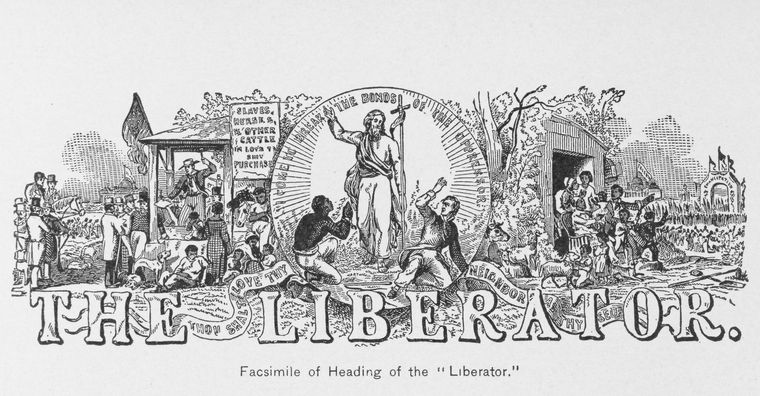
Schomburg Center for Research in Black Culture, Jean Blackwell Hutson Research and Reference Division, The New York Public Library. “Facsimile of heading of the ‘Liberator’.” New York Public Library Digital Collections.
As the Colored Conventions movement gained momentum, the nation approached its greatest conflict. News paper coverage in both white and Black papers, reflected the contentious nature of public debate as well as the inherent need for it. The 1855 National Colored Convention was advertised and avidly discussed in the months leading up to its October date. During the convention, dramatic moments that elicited audience reaction, such as George Downing’s burning of a letter from a colonization supporter received especial attention in the news.
Newspaper coverage for the 1855 National Convention filled the head-lines months before and after it occurred. In the articles, authors expressed reasons to hold the convention, as well as goals and details of the convention. Convention calls and the attendant opinions readers had about the national convention could even be read in Frederick Douglass’ Paper the summer leading up to the October convention. Following promotion in the Frederick Douglass’ Paper, other newspapers picked up the story; most of them simply mentioned the planned convention in short articles. But other readers such as Communipaw, (a pseudonym) wrote about what he thought should be discussed, still others touched on more practical matters such as concerns about attendee housing.
Once the convention began, newspapers covered many of the events with particular attention given to controversial and or more dramatic moments. Many articles discussed Mary Ann Shadd, the first female delegate, with close attention given to the debate and speeches which raged before she was admitted; readers offered varying opinions on the subject. Another important incident which received detailed coverage was the colonization letter incident. Delegates passionately discussed the best way to dispose of the letter, which they strongly opposed. Coverage ranged from indifferent to disapproving of this event, which caused a great uproar in the convention. Another topic which received a fair amount of press was the Passmore Wilson debate. The convention body wanted to thank Wilson, who had risked his safety assisting fugitive enslaved people escape to freedom. Delegates debates how to best recognize and reward Wilson. Frederick Douglass, opposed gifting him with a monetary reward while others thought that most fitting. Besides these major topics, coverage recounted facts: the numbers of attendees, the demographics reports, and resolutions passed. Some opinion pieces which seemed negatively biased about the proceedings were also printed.
Overall, the convention was depicted in a positive light in both Black and white papers. The press did a note-worthy job of insuring that everyone was well informed.
Click on the images below to read newspaper accounts of the 1855 National Colored Convention.
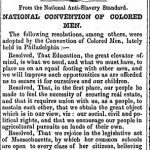
“National Convention of Colored Men.” Liberator, 23 Nov. 1855. From Gale. 19th Century U.S. Newspapers. ©2008 Gale, a part of Cengage Learning, Inc.
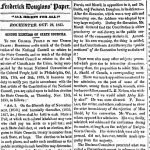
“The National Convention,” in Frederick Douglass’ Paper, 26 October, 1855. From Gale. 19th Century U.S. Newspapers. ©2008 Gale, a part of Cengage Learning, Inc.
As the authors noted in this editorial, they didn’t have the chance to write a fully detailed description of the convention in time for this article, but this article is full of other interesting information. It’s an overview mostly, filled with their observations throughout the convention. Interestingly enough, the authors found that the debates inhibited passing of more resolutions. They went over Mary Ann Shadd’s admittance into the convention, as well as a few other topics, however, they were all brushed over.
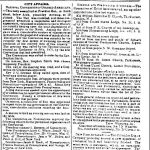
“City Affairs.” North American and United States Gazette, 17 Oct. 1855. From Gale. 19th Century U.S. Newspapers. ©2008 Gale, a part of Cengage Learning, Inc.
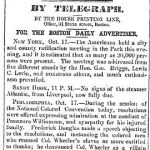
“By Telegraph.” Boston Daily Advertiser, 18 Oct. 1855. From Gale. 19th Century U.S. Newspapers. ©2008 Gale, a part of Cengage Learning, Inc.
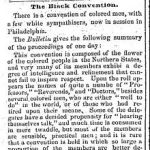
“The Black Convention.” Daily Morning News [Savannah, Georgia] 23 Oct. 1855: n.p. 19th Century U.S. Newspapers. Web. 25 Jan. 2015.”The Black Convention.” Daily Morning News [Savannah, Georgia] 23 Oct. 1855: n.p. 19th Century U.S. Newspapers. Web. 25 Jan. 2015.
More News
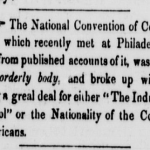
“The National Convention of Coloured Men,” in Provincial Freeman, 10 November 1855. From Gale. 19th Century U.S. Newspapers. ©2008 Gale, a part of Cengage Learning, Inc.
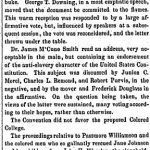
W. C. N. “National Convention of Colored Americans.” Liberator, 7 Dec. 1855. From Gale. 19th Century U.S. Newspapers. ©2008 Gale, a part of Cengage Learning, Inc.
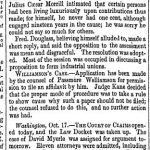
“Telegraphic Despatches.” Boston Daily Atlas, 18 Oct. 1855. From Gale. 19th Century U.S. Newspapers. ©2008 Gale, a part of Cengage Learning, Inc.
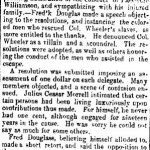
“During the session of the National Colored Convention to-day, resolutions were offered expressing admiration of the conduct of Passmore Williamson, and sympathizing with his injured family.” Daily Cleveland Herald, 18 Oct. 1855. From Gale. 19th Century U.S. Newspapers. ©2008 Gale, a part of Cengage Learning, Inc.