
THE FIGHT FOR BLACK MOBILITY: TRAVELING TO MID-CENTURY CONVENTIONS
BAKERIES
Cake and Pie Peddlers: Devonshire and Grace Williams lived in Lisle St. for more than 40 years. Grace was born in Delaware around 1825; her husband was from West Indies and was born around 1813. As a young man, Devonshire worked as a waiter. The couple had a series of tragedies: in 1843, their 17-year-old passed away. Ten years later, their infant daughter died and another infant would follow in 1861. The Williams were left with a son and a daughter, both of whom were conceived later in the couple’s lives (Grace was in her early forties and Devonshire in his fifties). To make ends meet, Grace worked as a laundress and Devonshire sold cakes and pies around Philadelphia.
Asbury Denny’s Bakery: Asbury Denny was an African American baker originally from Delaware. He ran a bakery with his wife on Lombard St. In 1863, he also enlisted as a soldier, serving in the 3rd U.S. Colored Infantry.
Ellis Peer: Confectioner Ellis Peer ran his business on South St. with his wife Eliza Peer. In the same household lived a saddler named Moses Wheeler. An 1860 census values his estate at 900 dollars.
-
-
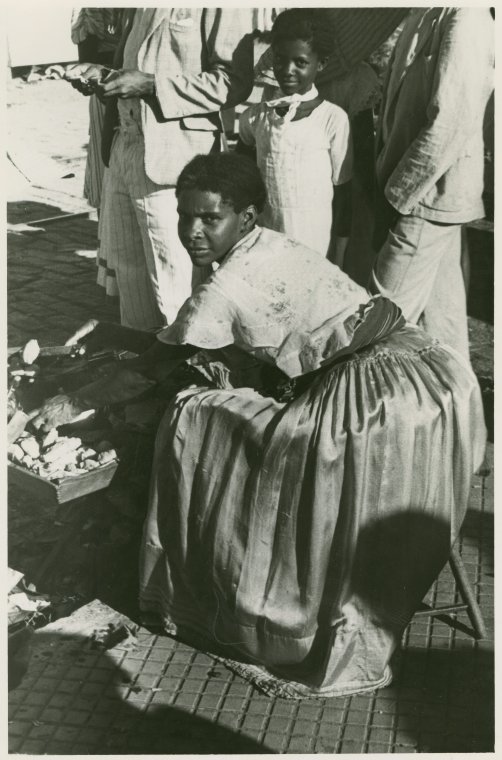
Selling food items in public areas is one of the few ways to earn a living in 19th-century Philadelphia. Above is a picture of an unnamed African American vendor.
Schomburg Center for Research in Black Culture, Photographs and Prints Division, The New York Public Library. “Woman vendor” The New York Public Library Digital Collections. 1860 – 1960.
-
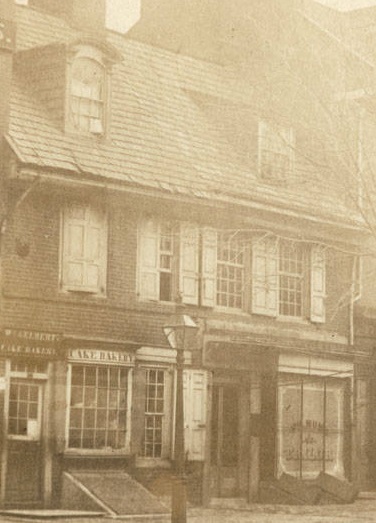
- Frederick de Bourg. “Old houses, on the north side of Arch St.” ca. 1859. Image Courtesy of Library Company of Philadelphia.