
Harper AT 200
HENRIETTA WATKINS NÉE RUSSELL
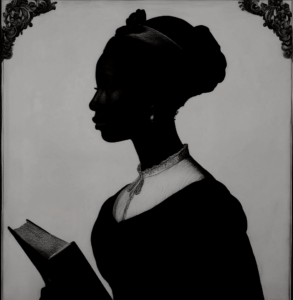
Silhouette of a nineteenth-century woman.
Henrietta Watkins was born sometime during the turn of the century. By 1810, there were over 22,000 free Black persons living in Baltimore County and close to 7,000 enslaved people. Henrietta Watkins grew up with several siblings, possibly more than 6, although precise numbers are elusive.[1] According to Sharon Hartman Strom, Henrietta’s father was a prosperous blacksmith who was wealthy enough to serve as a trustee of the Sharp Street Church.[2] Henrietta and her family were deeply involved in the church, and she and her husband raised their sons and daughters to be pastors and educators. Like her, her daughter Sarah Watkins was an educator and married a pastor, Reverend John Henry Holland. Although little is known about her life, Henrietta Warkins’s indelible influence and legacy manifested in the lives and achievements of Frances Ellen Watkins Harper and her children.
REFERENCES
[1] Richard Russell, Henrietta’s father, appears on the 1820 census as having eight free persons under 25 living with him and a free woman aged 45 or older. Fourth Census of the United States, 1820; Census Place: Baltimore Ward 8, Baltimore, Maryland; Page: 295; NARA Roll: M33_42; Image: 161
[2] Sharon Hartman Strom, Fortune, Fame, and Desire: Promoting the Self in the Long Nineteenth Century (Lanham: Rowman & Littlefield, 2016), 74.