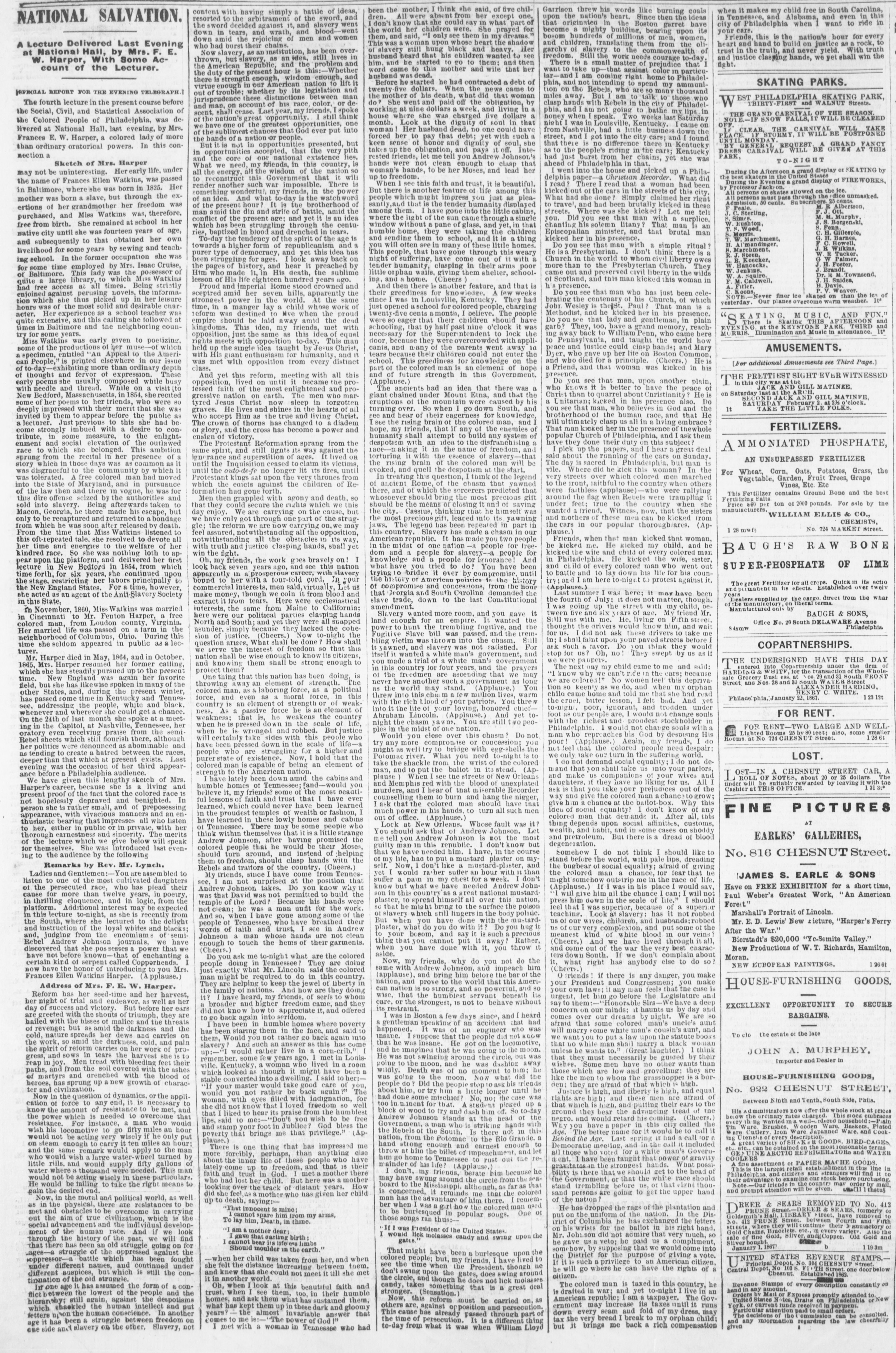
Frances Ellen Watkins Harper’s corpus encompasses a diverse range of literary forms, reflecting her multifaceted career as a writer, poet, and activist in nineteenth-century America. Her body of work includes several volumes of poetry, starting with Forest Leaves (circa 1849), as well as her groundbreaking novel Iola Leroy. Throughout her works, Harper consistently addressed themes of racial and gender equality, social justice, and the Black experience, making her corpus a significant and critical contribution to both literature and social reform movements of her time. Black newspapers often published her numerous essays and speeches on abolition and women’s rights, anti-slavery appeals, and public correspondences, leaving behind an archival trove that lends us insights into her life, literary inspirations, and relentless activism.
A note on pioneering Frances Ellen Watkins Harper scholars:
Frances Smith Foster was the first scholar and author to publish a comprehensive reader on Harper in 1990; Foster’s A Brighter Coming Day: A Frances Ellen Watkins Harper Reader was as, the author noted, a project that was more “complicated than expected.”[1] Literary scholars have long ignored or tersely referenced Harper in spite of the national attention and well-respected stature she achieved in her time; Foster’s Harper reader thus reintroduced Harper’s legacy and contributions to American literature. More Black women scholars have done the work of redressing the cultural amnesia that erased nineteenth-century Black writers from public and scholarly attention; Melba Joyce Boyd’s Discarded Legacy: Politics and Poetics in the Life of Frances E. W. Harper, 1825-1911 (1994), for one, was a crucial contribution that, like Foster, put the disregarded writer/activist back on the map, centering how Harper’s intellectual thought, radical vision, and literary genius shaped American culture.[2]
As more and more of Harper’s work are uncovered through digitization of historical documents, this exhibit will direct readers to online access to these works. Below is a list of Frances Ellen Watkins’ select accessible works.