
Harper AT 200
WILLIAM J. WATKINS
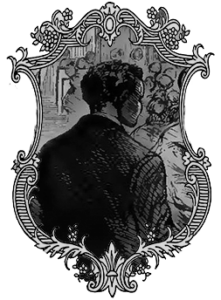
Silhouette of a nineteenth-century man.
Born only a year after Harper, William J. Watkins was born in 1826 to Rev. William and Henrietta Watkins. Similar to Harper, Watkins attended his father’s school, the Watkins Academy for Negro Youth, where he learned philosophy, grammar and oratorical skills. We can imagine the Watkins household as a space for lively discussion about the social, political, and racial climate of the nineteenth century, influencing children such as Harper and Watkins to continue these efforts into adulthood. The oldest of eight children, Watkins followed in his father’s footsteps at an early age and became involved in the Underground Railroad and civil rights efforts after moving to Boston in 1849. There, Watkins became involved with the Garrisonians during the early 1850s. In 1852, Watkins, along with Robert Morris, presented themselves to the Massachusetts Legislature to see a “charter to form an African American militia company in Boston.”[1] William Cooper Nell wrote about the petition and felt that “Success will be certain, and this achieved, all other rights will be added thereto.”[2] However, the Massachusetts Legislature did not follow through with any action.
Watkins was proponent of emigration and followed his father to Toronto sometime in 1852 or 1851.[3] He moved to Rochester, New York, to work as an associate editor for Frederick Douglass’ Paper in 1853. When he joined with Frederick Douglass, he participated more in women’s rights and Colored Conventions. He advised northern Blacks to become more militant in defense of their civil rights. On February 24, 1853, Watkins delivered his “Our Rights as Men” speech before a Boston legislative committee requesting to form an independent militia of Black citizens (Link to speech). Watkins also chastised white abolitionists in his lectures for their reluctance to treat Blacks as equals.[4]
Influence from his father’s activism and writing led Watkins to attend Colored Conventions such as the 1853 National Convention of Free People of Color in Rochester, NY, the 1855 New York State Convention of Colored Men held in Troy, the 1858 New York State Convention of Colored Men held in Troy, and the 1858 Ohio State Convention of Colored Men held in Cincinnati. His cousin Frances Ellen Watkins [Harper] also attended the 1858 Ohio State Convention with proceedings demonstrating both of the Watkins giving a donation of $10 to the Society, the highest donations of the Convention. Their presence together at the 1858 Ohio Convention demonstrates the importance of familial ties, education and upbringing and how these differences factors appear in the Conventions.
This page is adopted from a previous exhibit, “The Fight for Black Mobility: Traveling to Mid-Century Conventions.” Click here to read more about William Watkins.
CREDITS
Curators: Dr. Christine Anderson, History Department, Xavier University and Nancy Yerian, Independent Historian
Undergraduate Researchers: African-American Struggle for Equality, Xavier University, Spring 2016 Class
Submitted by Khaliq Gatson, English 110, Taught by James Casey, University of Delaware.
Edited and revised by Samantha de Vera, University of Delaware.
REFERENCES
[1] Christian Samilto. Becoming American Under Fire: Irish Americans, African Americans, and the Politics of Citizenship During the Civil War Era. (Ithaca: Cornell UP, 2009). 23
[2] William Cooper Nell, Dorothy Porter Wesley, and Constance Porter Uzelac. William Cooper Nell: Nineteenth-Century American Abolitionist, Historian, Integrationist. (Baltimore: Black Classic P, 2002), 329.
[3] Milton C. Sernett. 319
[4] Michael G. Lacy and Kent A. Ono. Critical Rhetorics of Race. (New York: New York UP, 2011),144.
Edited by: Dr. Gabrielle Foreman.